
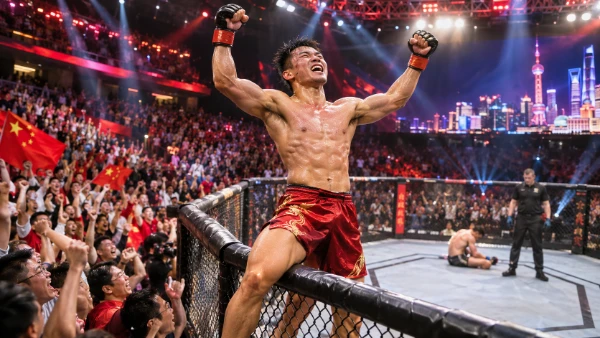
Song Yadong delivered one of the biggest victories of his mixed martial arts career at UFC Shanghai on 29 August 2026, knocking out Umar Nurmagomedov in the second round of their bantamweight main event. Fighting in front of a passionate home crowd at the Oriental Sports Center, the Chinese contender ended the contest with a perfectly timed right uppercut at 1:48 of round two. The result handed Nurmagomedov only his second professional defeat and significantly changed the conversation surrounding the UFC bantamweight title race. For Song, the victory represented more than a memorable finish. It demonstrated his ability to overcome a highly regarded opponent whose wrestling, technical striking and previous championship experience had made him a strong favourite before the fight.
UFC Shanghai 2026: How Song Yadong Defeated Umar Nurmagomedov
The main event brought together two established bantamweight contenders with contrasting strengths and considerable ambitions. Nurmagomedov entered the contest with a professional record of 20 victories and one defeat, having previously challenged Merab Dvalishvili for the UFC bantamweight championship. The Russian fighter was particularly respected for his wrestling, positional control and ability to combine takedowns with accurate striking. Song arrived with a record of 23 wins, nine defeats and one draw, alongside extensive experience against ranked UFC opponents. Although the Chinese fighter possessed dangerous punching power and excellent boxing combinations, Nurmagomedov’s broader grappling credentials made him the favourite in many pre-fight assessments.
The opening round showed why the match-up had attracted so much attention. Nurmagomedov attempted to establish his usual rhythm, using movement and changes of level to create opportunities for takedowns. He managed to bring Song to the canvas, but the Chinese contender defended effectively and worked his way back to his feet. Both men landed meaningful strikes during the standing exchanges, preventing either fighter from establishing complete control. Song also attempted a guillotine choke during an early grappling exchange, although Nurmagomedov escaped without allowing the submission attempt to develop. These moments established a competitive contest rather than the one-sided wrestling performance some observers had anticipated.
The decisive action came early in the second round. Song increasingly recognised the moments when Nurmagomedov lowered his level to initiate a takedown, allowing him to anticipate the Russian’s forward movement. After successfully defending another attempt to bring the fight to the ground, Song remained composed and prepared to counter. When Nurmagomedov moved into range, the Chinese fighter connected with a short right uppercut that immediately dropped his opponent. The referee stopped the contest at 1:48 of the round, confirming a knockout victory for Song. The finish was particularly significant because it came against a fighter who had previously built his reputation on controlling dangerous opponents and limiting their opportunities to land clean, decisive punches.
The Knockout That Changed the Fight in Round Two
Song’s finishing punch was the product of timing rather than a prolonged attacking combination. Nurmagomedov had repeatedly threatened takedowns, forcing his opponent to divide his attention between defending wrestling exchanges and responding to strikes. By the second round, however, Song had begun anticipating the distance and positioning required for those entries. Instead of retreating continuously or committing to an extended exchange, he remained close enough to counter when Nurmagomedov moved forward. His compact uppercut travelled through the space created by the Russian’s changing posture, producing an immediate and decisive result. The sequence illustrated how a single well-timed strike can overturn a contest between highly ranked fighters.
The finish was even more remarkable because Song had suffered an accidental clash of heads shortly beforehand. The collision opened a substantial cut beneath his right eyebrow, creating another difficulty during an already demanding contest. An injury close to the eye can interfere with a fighter’s concentration and visibility, particularly when blood begins to flow during striking exchanges. Song nevertheless maintained his composure and continued responding to Nurmagomedov’s attacks. Rather than allowing the injury to force him into reckless aggression, he remained patient until the opportunity appeared. His ability to manage that uncomfortable moment added another important dimension to the performance.
The official result was recorded as a knockout by right uppercut, ending the scheduled five-round main event before the second round had reached its halfway point. No judges’ decision was required, and the outcome left little uncertainty about who had won. Song’s victory also demonstrated that defending takedowns can create attacking opportunities rather than simply preventing an opponent from scoring. Each successful defensive exchange kept the contest in a position where his punching power could influence the result. For Nurmagomedov, the loss highlighted the danger of predictable forward entries against a sharp counterpuncher, even when those entries form part of an otherwise effective and technically accomplished fighting style.
Why Umar Nurmagomedov’s Second Career Loss Matters
Before UFC Shanghai, Nurmagomedov had lost only once in his professional mixed martial arts career. That defeat came against Merab Dvalishvili in January 2025, when he challenged for the UFC bantamweight championship at UFC 311. Dvalishvili won by unanimous decision after five rounds, ending Nurmagomedov’s previously unbeaten professional record. The Russian subsequently rebuilt his position in the division with victories over Mario Bautista and former UFC flyweight champion Deiveson Figueiredo. Those results helped reinforce his reputation as an elite contender and placed him back among the leading candidates for another championship opportunity. His arrival in Shanghai therefore represented an important stage in a renewed title campaign.
Nurmagomedov’s experience against high-level opposition made the Shanghai result especially noteworthy. His previous victories included a convincing performance against Cory Sandhagen, another respected bantamweight contender known for his movement and striking variety. Nurmagomedov had also demonstrated an ability to compete over five rounds against championship-level opposition, giving him a substantial advantage in experience during longer fights. His wrestling pedigree and disciplined approach had generally made him difficult to control or finish. Losing by knockout to Song therefore represented a different challenge from his earlier decision defeat against Dvalishvili, raising new questions about how he would respond to an opponent who had successfully anticipated his takedown entries.
The defeat did not erase Nurmagomedov’s achievements or remove the technical strengths that had brought him close to the bantamweight championship. However, it interrupted the momentum generated by his two consecutive victories following UFC 311. Entering Shanghai as a leading contender, he had an opportunity to strengthen his case for another title fight. Instead, Song claimed the more significant result and gained the stronger immediate argument for advancement. The division’s competitive nature means that Nurmagomedov remains capable of returning to contention, but another championship opportunity can no longer be treated as an automatic consequence of his earlier performances. His next steps will depend on his recovery, subsequent opponents and results.
Nurmagomedov’s Career Before and After UFC Shanghai
Nurmagomedov’s professional record stood at 20 wins and two defeats immediately after the Shanghai main event. His first loss had arrived through a five-round decision against Dvalishvili, whereas his second came through an early knockout against Song. The distinction matters when assessing his career because the two defeats exposed different challenges. Against Dvalishvili, he struggled to overcome sustained pressure, wrestling exchanges and the champion’s relentless work rate. Against Song, the decisive issue was a counterpunch delivered as he attempted to close the distance. Neither result offers a complete assessment of his abilities, but together they provide valuable evidence about the demands of competing against the division’s strongest fighters.
His record also contains achievements that remain relevant despite the setback. Nurmagomedov established himself as a dangerous contender through victories over established UFC opponents, combining effective kicking with well-timed takedowns and strong positional awareness. He has demonstrated the ability to compete in both striking and grappling exchanges, rather than depending exclusively on one area of mixed martial arts. His earlier success against Sandhagen was particularly important in establishing his position among the division’s leading names. Those strengths remain part of his fighting identity, and a single knockout does not establish that they have disappeared. The more important question is whether he can adjust his approach when an opponent is prepared to counter his entries.
The Shanghai defeat may encourage changes in how Nurmagomedov approaches opponents with particularly dangerous hands. Varying the timing of takedowns, using additional striking combinations to disguise forward movement and avoiding repeated entries from similar distances are all possible areas of development. These are tactical considerations rather than confirmed changes to his training programme. Any assessment of his future must also recognise that recovery after a knockout requires appropriate medical attention and clearance before another contest. At 30 years old during the Shanghai event, Nurmagomedov still had the experience and competitive foundation to pursue further success. His return to the title picture, however, would need to be earned through subsequent performances.
What Song Yadong’s Victory Means for the UFC Bantamweight Division
For Song Yadong, defeating Nurmagomedov was one of the most consequential results of his UFC career. The Chinese fighter had already competed against several prominent bantamweights, including Cory Sandhagen, Petr Yan, Henry Cejudo and Sean O’Malley. Those experiences provided valuable lessons about the level of consistency required to succeed near the top of the division. Earlier in 2026, Song suffered a defeat against O’Malley before returning with a submission victory over former flyweight champion Deiveson Figueiredo in Macau. His knockout of Nurmagomedov extended that recovery and strengthened his claim to be considered among the leading bantamweight contenders. It also demonstrated that his striking could produce a decisive finish against an opponent with elite grappling credentials.
The location added considerable importance to the victory. UFC Shanghai took place at the Oriental Sports Center, giving Chinese spectators an opportunity to support one of their country’s most established male mixed martial artists in a major international contest. Song had already built a substantial following through his performances in the UFC, but winning a main event against a former championship challenger provided a different level of recognition. The crowd’s reaction to the second-round knockout reflected the significance of the moment. Although home support cannot determine the outcome of a fight, the atmosphere made the result particularly memorable and reinforced Song’s position as a prominent figure in Chinese mixed martial arts.
From a sporting perspective, the victory presented a strong argument for Song to receive another important contest, potentially involving a future title opportunity. Nurmagomedov entered the event ranked third among UFC bantamweights, while Song was listed sixth in the official event information. Beating a higher-ranked opponent in such emphatic fashion was therefore likely to influence the subsequent divisional discussions. Nevertheless, victory over a leading contender does not automatically guarantee a championship fight. UFC matchmaking depends on several factors, including the reigning champion’s schedule, other contenders’ recent results and the availability of suitable opponents. What Shanghai established beyond doubt was that Song had earned a more prominent position in those discussions.
Other UFC Shanghai Results and the Wider Impact of the Event
The main event was not the only notable result on the UFC Shanghai card. In the women’s strawweight co-main event, Denise Gomes defeated former title challenger Yan Xiaonan by technical knockout at 4:49 of the first round. Gomes produced an impressive finish involving an elbow and follow-up punches, securing a major victory against an experienced Chinese opponent. The result was particularly important because Yan entered the contest as one of the division’s higher-ranked fighters. Gomes therefore strengthened her own case for advancement in the strawweight rankings. The outcome also meant that the evening’s two featured bouts produced contrasting results for the Chinese competitors, with Song winning the headline contest while Yan suffered a disappointing defeat.
Several other main-card contests ended inside the scheduled distance. Kai Asakura defeated Aoriqileng by second-round knockout following a head kick and additional strikes, with the stoppage arriving just 34 seconds into the round. Liu Ce recorded a first-round knockout against Levi Rodrigues Jr. at 4:26, while Bilal Hasan stopped Nilson Rojas with a right hand at 2:28 of the second round. In the flyweight division, Sumudaerji defeated Alex Perez by unanimous decision, receiving three identical scores of 29–28. These results contributed to an event featuring several decisive finishes across different weight classes, although the main event remained the defining moment because of its significance for the bantamweight championship picture.
UFC Shanghai 2026 will be remembered primarily for Song Yadong’s second-round knockout of Umar Nurmagomedov and the resulting change in momentum between two leading bantamweight contenders. Song demonstrated composure under pressure, effective takedown defence and the precise counterpunching required to defeat an opponent who had previously lost only once. Nurmagomedov, meanwhile, left Shanghai with a second professional defeat and the challenge of rebuilding another championship campaign. The immediate result was clear, but its longer-term significance will depend on the fighters’ subsequent performances and future UFC matchmaking decisions. For Chinese mixed martial arts, the event provided a landmark main-event victory and another important moment in the country’s growing presence within the sport.