
Formula 1 qualifying creates a very different betting environment from the Grand Prix itself. Instead of judging race pace, tyre life over a long stint or pit-stop strategy, qualifying markets are largely decided by outright speed over a small number of laps. In 2026, with 22 drivers competing and six eliminated in each of the first two qualifying phases before ten cars progress to Q3, small differences in performance can move a driver several positions. Three of the most common markets are pole position, a top-three qualifying finish and driver duels. They may appear closely related, but they ask different questions. A pole bet requires one driver to finish first in qualifying, a top-three selection allows several successful positions, while a duel compares one driver only with a specified rival. Understanding that distinction is more useful than simply backing the driver who looked fastest in practice.
How Pole Position and Top-Three Qualifying Bets Differ
A pole position market is the narrowest of the three. The selected driver normally has to finish at the top of the official qualifying classification. In a conventional Grand Prix qualifying session, that means being quickest after the decisive phase of qualifying and recording the result used by the bookmaker for settlement. The important point is that pole betting is about qualifying performance rather than Sunday race performance. A car that is particularly strong over one lap can therefore be a serious pole contender even when its expected long-run race pace is less convincing. Track position, the ability to bring the tyres into the correct operating window and executing a clean final lap can matter more here than fuel management or tyre degradation over a Grand Prix distance.
A top-three qualifying market provides a wider range of successful outcomes. Instead of needing the fastest driver, the selection normally needs to finish first, second or third in the qualifying classification. This changes the risk profile substantially. A driver may miss pole by two or three tenths yet still satisfy a top-three bet comfortably. The price will generally be shorter than the price available for pole because the bettor has several qualifying positions rather than only one. This market can make particular sense when a driver is consistently quick enough to challenge the front row but does not appear to have a clear pace advantage over every rival.
The difference can be seen in actual 2026 qualifying results. At Monaco, Kimi Antonelli qualified first ahead of Max Verstappen and Lewis Hamilton, while at Silverstone Antonelli again took first place, this time with Charles Leclerc second and Hamilton third. A pole bet on Antonelli would have required P1 on each occasion. A qualifying top-three bet on any of the three drivers occupying those positions would have had a broader route to success. The distinction sounds obvious, but it changes how practice data should be interpreted: identifying one likely fastest driver is necessary for pole betting, whereas top-three analysis is more concerned with identifying a small group capable of remaining near the front through the entire session.
Why the Fastest Practice Driver Is Not Automatically the Best Pole Selection
Practice times are useful, but the headline classification alone can be misleading. Teams run different fuel loads, tyre programmes and preparation laps, and a driver who tops a practice session may not have completed the same programme as a rival several positions lower. For qualifying analysis, the more useful question is how repeatable the driver’s short-run pace appears. A single exceptional lap can demonstrate potential, but several competitive laps on comparable tyres provide stronger evidence that the car can reproduce its speed once qualifying begins. Sector times can also help identify whether a driver is genuinely strong around the whole circuit or gained most of the advantage in one part of the lap.
Track evolution is another reason practice order should not simply be copied into a qualifying bet. Formula 1 circuits commonly become quicker as more rubber is laid down, while changes in track temperature or wind can alter the balance of the car between practice and qualifying. This matters especially on circuits where drivers wait until late in a session to make their final attempt. A driver may have the underlying pace for pole but lose the opportunity through traffic, a yellow flag or a poorly timed run. Pole position therefore carries considerable single-lap exposure: one interrupted attempt can have a much greater effect than it would in a top-three market.
The circuit itself should also influence the choice between pole and top three. On a short lap, where several cars can be separated by only a small fraction of a second, asking one driver to beat the entire field creates a demanding bet. A top-three position leaves more room for minor execution differences. At tracks where one team has a clearer advantage in the corners, on the straights or through a particular sequence, the case for a pole selection can become stronger. The central task is not predicting who has the best car in general, but deciding how much confidence there is that one specific driver can beat every other driver during qualifying.
Driver Duels Measure Relative Performance Rather Than the Whole Field
A qualifying driver duel, often described as a head-to-head or qualifying match bet, removes most of the field from the equation. Two named drivers are paired and the bet asks which of them will achieve the superior qualifying result under the bookmaker’s settlement rules. A driver can therefore win a duel without challenging for pole or even reaching the top three. If one driver qualifies seventh and the other finishes eleventh, the seventh-placed driver can still be the successful selection. This makes duels particularly useful for comparing teammates or drivers in cars with similar performance rather than attempting to forecast the exact front of the grid.
The strongest starting point for a duel is usually the relative performance of the two drivers rather than their absolute championship position. Teammate comparisons can be especially informative because both drivers use machinery built to the same team’s specification, removing some of the uncertainty created when comparing cars from different constructors. Recent qualifying results, the frequency with which each driver reaches Q3, margins between teammates and performance on circuits with similar characteristics all provide useful context. A 6-2 qualifying advantage across eight recent comparable events, for example, says more about a matchup than simply noting that one driver has more championship points.
Cross-team duels require a slightly different approach. Here, car characteristics become a major part of the comparison. One car may perform better on high-speed circuits, while another may be more competitive on tracks dominated by slow corners or traction zones. Weather can change that relationship quickly. A driver who appears the stronger selection in dry conditions may lose part of that advantage if qualifying is expected to be wet or if conditions change between Q1 and Q3. Since the objective is only to beat one named opponent, the analysis should remain focused on the factors separating those two drivers instead of trying to rank the entire grid.
How Q1, Q2 and Q3 Affect Head-to-Head Betting
The knockout structure matters because drivers do not necessarily complete the same number of qualifying phases. With 22 cars in the 2026 field, six are eliminated at the end of Q1 and another six after Q2, leaving ten for Q3. A driver who progresses further will normally occupy a higher position in the final qualifying classification than someone eliminated earlier. This creates a natural breakpoint in many duels. If one selection is regularly reaching Q3 while the opponent often drops out in Q2, the matchup may depend less on their ultimate lap-time difference and more on the probability that both survive the earlier stages.
Bookmaker settlement terms still need to be checked because head-to-head rules are not identical everywhere. Paddy Power and Betfair state in their Formula 1 rules that qualifying match betting is determined by the better qualifying performance between the quoted drivers using official FIA times, while subsequent grid penalties or demotions are generally disregarded for these qualifying markets. William Hill similarly states that its qualification match market is settled using the better time from the relevant qualifying performance and that later adjustments to grid positions do not count. The practical lesson is simple: the result used for a qualifying duel can differ from the eventual starting-grid order shown after penalties have been applied.
Participation rules are another point that can affect settlement. A driver who suffers a mechanical problem before setting a representative time may be treated differently from a driver who completes part of qualifying and is then eliminated. Some bookmaker rules void a qualifying match when one of the named drivers does not take part, while other circumstances remain valid once qualifying participation has begun. Red flags and an abandoned qualifying session can introduce further conditions. Checking the individual market rules before placing the bet prevents a situation where the bettor correctly predicts the sporting outcome but misunderstands how the wager itself will be graded.
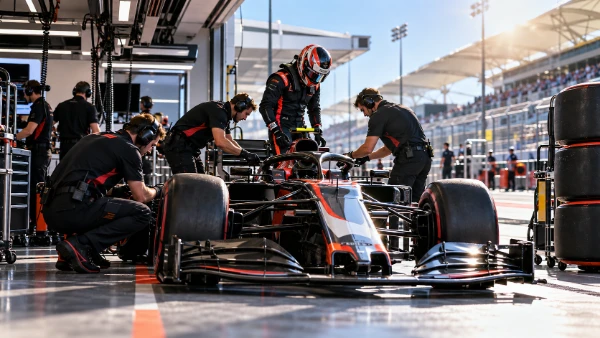
Choosing Between Pole, Top 3 and Driver Duel Markets
The three markets require different levels of certainty. Pole position demands the strongest opinion because the selected driver has to outperform the full field. A top-three selection allows for a competitive qualifying session without requiring perfection. A driver duel reduces the question further to the relative result of two specified drivers. This means the most suitable market often depends on what the available evidence actually shows. If practice and recent qualifying data suggest that one driver has a genuine advantage over everyone else, pole may directly reflect that view. If several drivers appear closely matched at the front, a top-three market may align more closely with the available evidence.
Duels become more relevant when the clearest edge concerns two specific drivers rather than the entire grid. Suppose two teammates have similar cars but one has repeatedly been stronger over a single lap at circuits with the same broad characteristics as the upcoming event. That evidence may support a head-to-head view without providing enough information to predict pole or a top-three result. The reverse can also happen: a driver from a leading team may look highly likely to remain among the first three yet be paired in a duel with an equally strong teammate, making the top-three question easier to assess than the direct matchup.
Prices also change the decision. A higher probability does not automatically mean a more attractive bet if the odds already reflect that probability. Pole markets usually provide bigger prices because only one position wins, while top-three markets generally offer less because three qualifying positions can qualify. Head-to-head odds may be relatively close when bookmakers expect little between the drivers. Comparing the implied probability in the price with a realistic estimate of the driver’s chances is more useful than choosing the market solely because one option offers larger potential returns. No qualifying market removes uncertainty, and stake size should reflect that uncertainty.
What to Check Before Betting on Formula 1 Qualifying
Start with evidence that relates directly to one-lap performance. Recent qualifying results, teammate gaps, Q1-to-Q3 progression, short-run practice pace and the characteristics of the circuit are more relevant than simply looking at the Drivers’ Championship standings. A driver can score strongly on Sundays through race management and consistency while still being relatively weaker in qualifying. Conversely, another driver may regularly produce excellent qualifying positions without converting them into equivalent race results. Separating those two skill sets is essential because qualifying betting ends before race strategy, pit stops and long-run tyre management become decisive.
Conditions and session timing deserve a separate check close to qualifying. Rain, wind direction, track temperature and the possibility of rapidly improving conditions can alter the competitive order. In a dry and stable session, recent one-lap pace may translate more reliably into the final classification. Mixed weather creates additional uncertainty because the timing of a run can become as important as outright speed. Traffic also matters, particularly on shorter circuits where many cars attempt to begin flying laps in a narrow window. These factors have the greatest impact on pole markets but can also change top-three positions and tightly matched driver duels.
Finally, read the settlement wording for the exact market rather than assuming that pole position, starting position and qualifying position always mean the same thing. Major bookmakers commonly use official qualifying times for Formula 1 qualifying bets and may ignore grid penalties imposed afterwards, but individual rules can differ and exceptional sessions can be handled separately. Confirm what happens if qualifying is shortened, abandoned, delayed or completed under an altered format, and check the participation requirement for driver matchups. Once those conditions are clear, the three markets become easier to separate: pole asks who will be quickest, top three asks who can remain among the leading qualifiers, and a driver duel asks only which of two named competitors will finish qualifying ahead.